

For media, proptech, insurers, and institutional teams
Read the single-property rental owner correctly
If your product, policy, coverage, or market strategy is built for the owner with one or two rentals, you’re building for most of the market – and for a segment that’s frequently interpreted from the outside.
I’ve been that owner since 2000.
Book 50 minutes and bring the assumption you’re least sure about.
Start with the size of the gap
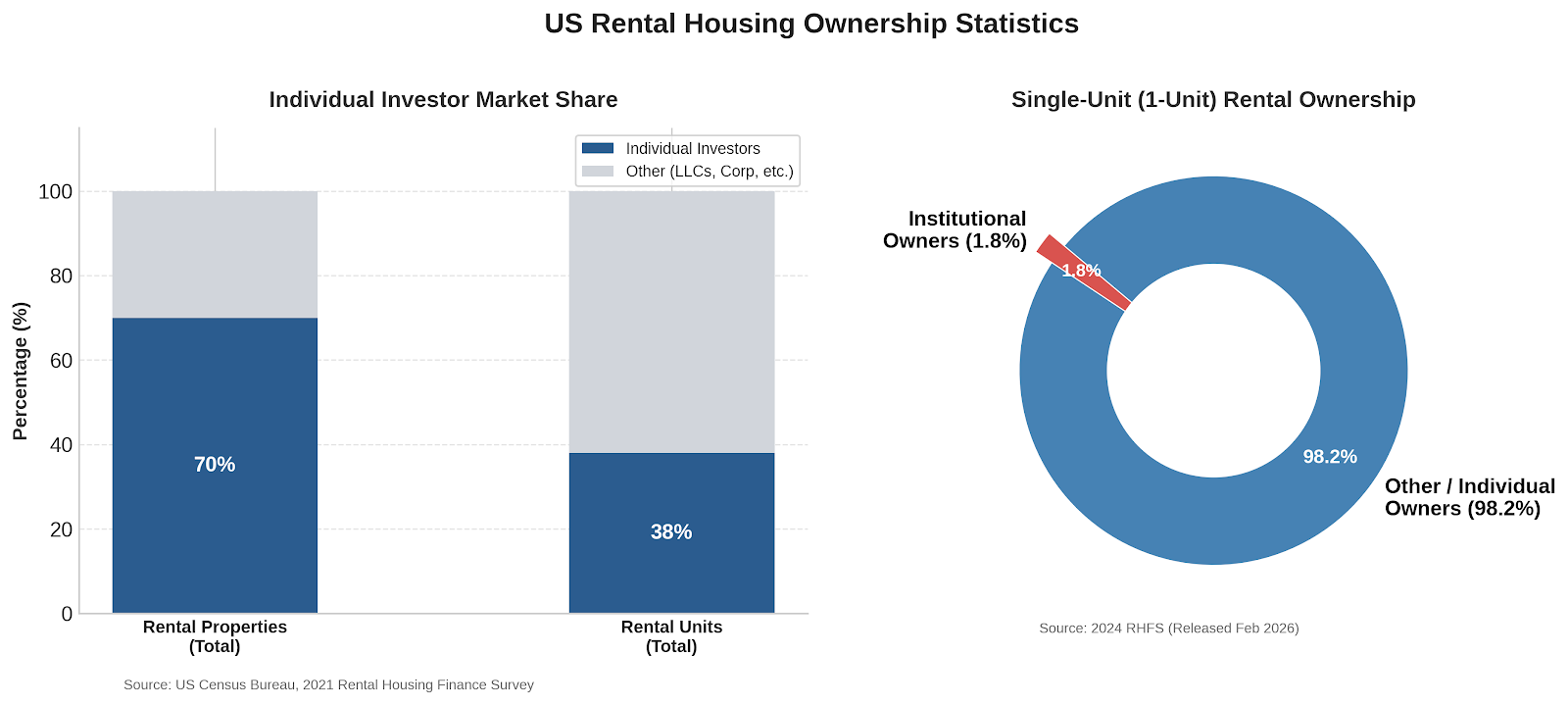
Individual investors own roughly 70% of US rental properties, representing 38% of all rental units (US Census Bureau, 2021 Rental Housing Finance Survey). Institutional owners account for just 1.8% of one-unit rental properties (2024 RHFS, released February 2026).
So the buyer you’re modeling is one person, with one or two properties, a full-time job, and no operations department behind them. They make decisions between work, household responsibilities, family needs, and everything else their lives require.
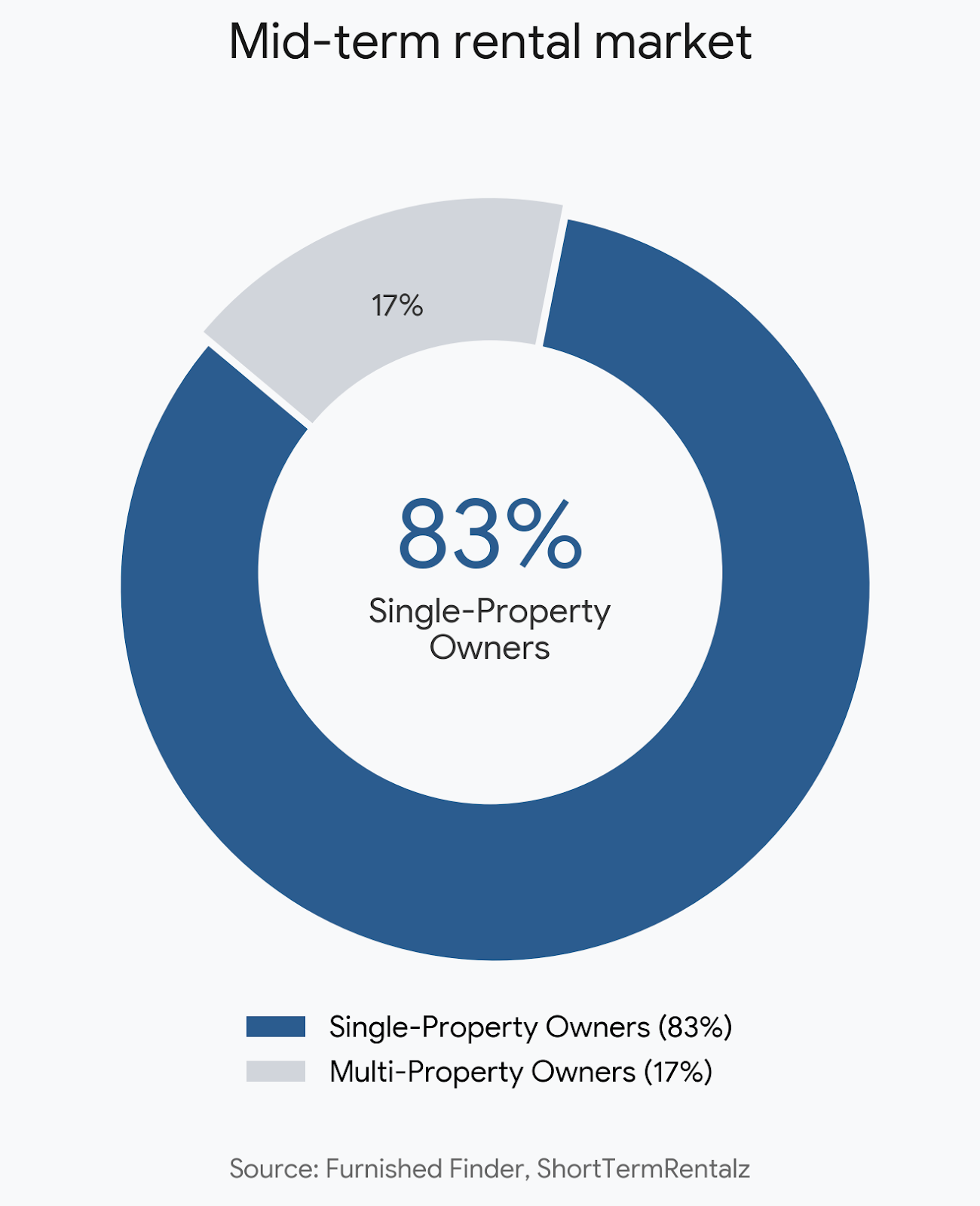
Yet much of what is published about this owner comes from platform data, portfolio operators selling a playbook, or research written by people who have never had a code-enforcement notice arrive in their mailbox. The segment is described from the outside—and then marketed to as if the description were complete.
That’s the gap this call consultation is designed to address.
What 50 minutes gets you

How positioning is actually received.
Bring a rule change, rate revision, product roadmap item, coverage exclusion, or campaign concept. I will help you assess how a one- or two-property owner is likely to interpret it: what they will do with it, what they will ignore, and where they may draw the wrong conclusion.

The segment’s real vocabulary.
Learn how these owners actually refer to their problems, what they search when they need an answer late at night, and which language causes them to disengage. (Much of the category is written in portfolio language for an audience that doesn’t use it.)

The place an assumption breaks.
Bring the deck slide, underwriting model, messaging test, onboarding flow, research finding, or policy draft. A specific artifact gives us something real to examine and makes better use of the time than a general discussion of “the market.”

A straight answer about the limits of my expertise.
I’ve operated since 2000 across six distinct market conditions. I haven’t operated everywhere, and I’ll tell you directly when a question depends on local experience or specialized expertise. You won’t get false certainty or a conclusion shaped to sell you more work.
The record behind the work
I’ve operated rental properties since 2000 across six distinct markets in two states: a national-park resort economy where the season drives the business, two rural towns, two small cities, and a coastal seasonal market.
The operating model changed with the property and market. Across those properties, I’ve used short-term, mid-term, long-term, hybrid, and seasonal approaches. Decisions depended on local demand, applicable regulations and enforcement, the income the property needed to produce, the amount of risk it could reasonably carry, and how it fit in its community.
While that experience doesn’t make me an expert in every town, it’s taught me how to assess a property and its market without relying on generic advice or assumptions based on a single location.
I built and managed these rentals while simultaneously working for HP for nearly 23 of those same years. My work evolved from marketing to enterprise and public sector work to global business development for healthcare, financial services, and insurance industries.
During those years, I also raised children, ran a household, and traveled for leisure. That context matters because many single-property owners are like me: not trying to build an operating company, but simply trying to make responsible decisions about a property without turning it into a second job or allowing it to take over their lives.
Regulatory exposure, from inside it
If you sell compliance tooling, write regulatory content, underwrite this kind of property, or design communications around changing rules, bring that question to the consultation. We can examine whether your work accounts for the point at which a diligent owner cannot get a usable answer—and what your customer is likely to do when that happens.